
 Vironix Health
· news · 2 min read
Who Will Support Dementia Care?
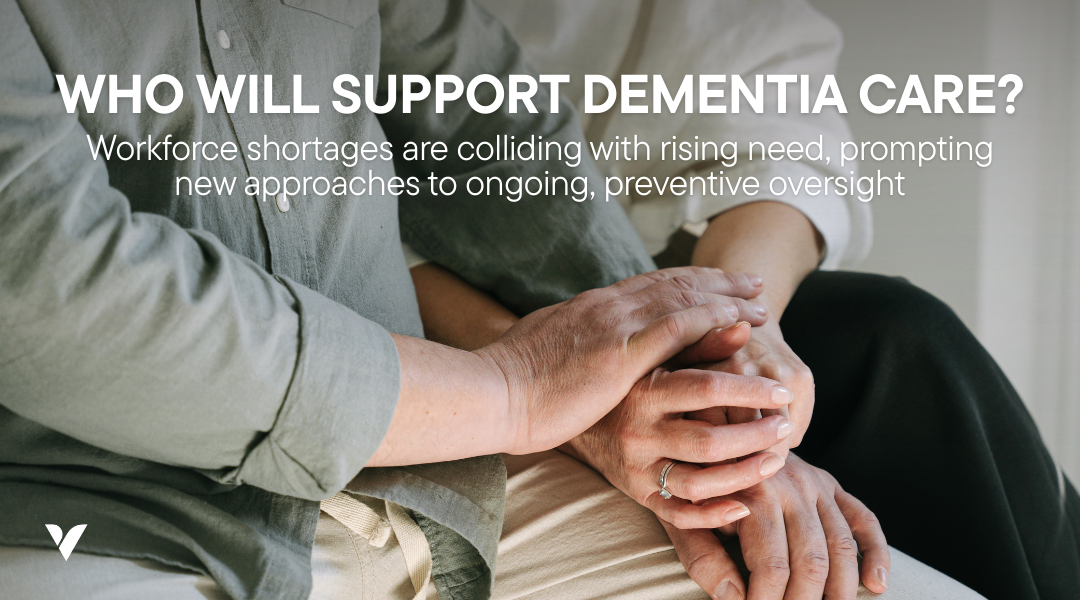
Dementia care is entering a new phase, and one question keeps surfacing.
Who will be there to help?
A recent report from STAT examines the widening gap between the number of people living with dementia and the workforce available to support them. As more Americans age into higher risk years, families are often managing day to day care for long stretches of time, while home health and long term care teams remain constrained.
For providers, this is showing up in practical ways. Follow-ups get delayed. Caregivers feel stretched. Subtle cognitive or behavioral changes are missed until they result in an emergency visit or hospitalization.
Dementia requires steady, ongoing attention. Medication adjustments, monitoring for safety risks, coordination across specialists, and frequent communication with family members all take time. Yet most care models are still built around periodic office visits.
That gap is driving more focus on prevention and earlier visibility. Research continues to show that identifying cognitive changes sooner allows for better care planning and tighter management of related chronic conditions such as hypertension and diabetes. Earlier intervention can support safer aging at home and reduce avoidable complications.
Remote and passive monitoring tools are also expanding. Activity patterns, sleep disruption, medication adherence, and mobility changes can now be tracked in the background, giving care teams additional context between visits. For families, that can mean clearer guidance and fewer unexpected crises. For clinicians, it can support more timely outreach when patterns shift.
At Vironix Health, this work is central to how we support patients. Our care teams provide structured remote monitoring and consistent touchpoints for individuals managing chronic conditions. By maintaining regular visibility into biometric trends and daily health signals, clinicians can intervene earlier, adjust care plans proactively, and support patients and caregivers before issues escalate.
As dementia prevalence rises and workforce pressures continue, building reliable systems for continuous oversight may be essential to sustaining high quality care.
You can read more here: https://lnkd.in/gQ3uRRbe